
Top 10 features you can expect from your membership platform.
When it comes to running a successful membership organisation, the right platform can make all the difference. The ten must-have features to look for are payment processing, event management, comprehensive member profiles, email automation, a robust CRM, analytics and reporting, tiered membership options, security and compliance, an effective landing page or member portal, and auto-renewal functionality. Together, these features form the foundation of a platform that works hard for both your team and your members.
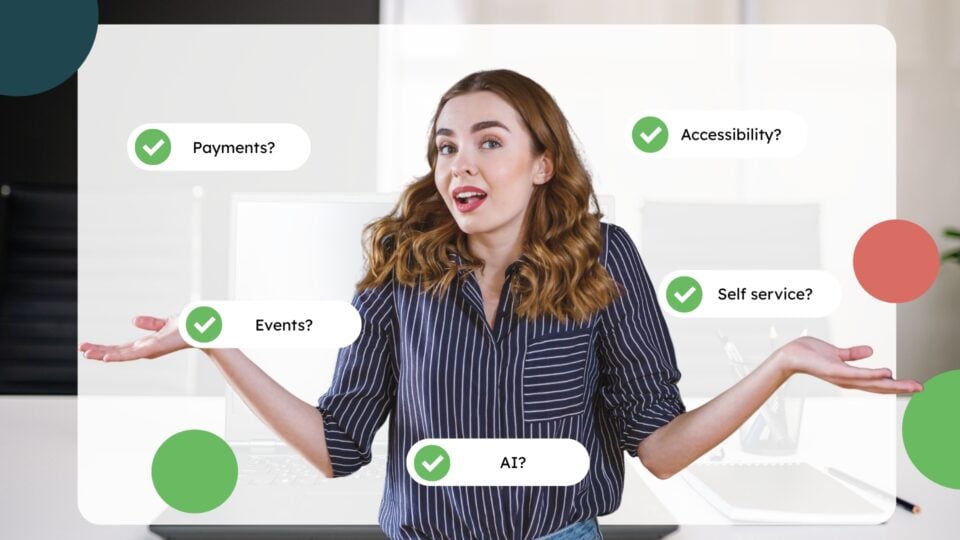
Introduction
Every membership organisation knows that a membership platform isn’t just a website but a hub where your members can connect, engage, and get value from your organisation.
To attract, retain, and grow the community, platforms need to be robust beyond the basics. The right features ensure smooth operations for your teams and an outstanding experience for your members.
So we look at ten must-have features to guarantee success for your membership organisation and breakdown what you can expect from your systems. Sometimes you don’t know what you don’t know! So let’s find out…
Payment processing functionality
Key features and functionalities you can expect (in short):
- Automated billing and renewals (often with automated emails)
- Multi-channel processing and support for credit/debit cards, digital wallets and direct debit
- Reporting and analytics in real time
- Integration with your accounting software
- Secure PCI-compliant payment processing with the ability to manage complex membership types
- Self-service for your members
Payment processing is about building trust and making sure both your members and your team feel supported at every step of the financial journey.
A clunky or unreliable system not only frustrates members but can directly impact renewals, event attendance, and, ultimately, your organisation’s cash flow. That’s why integrated payment processing functionality is one of the most important features any successful membership platform should have.
At a minimum, members should be able to pay their dues, register for events, or make one-off payments through a secure and straightforward process. Offering multiple payment options (such as credit or debit card, PayPal, direct debit, or even region-specific payment gateways) reduces barriers and ensures members can choose what works best for them.
The best systems also provide useful extras that make life easier for both members and staff. Features like automatic receipts, invoice generation, and recurring billing for renewals cut down on manual admin and reduce the risk of errors.
From the member’s perspective, it creates a smoother, more professional experience. From the admin point of view, integrated payment processing also allows your finance team to reconcile transactions more efficiently, track trends in revenue, and spot issues early. And with compliance features built in, you can give members confidence that their financial data is always secure.
Did you know?
Clients rate our software an average of 9.2 out of 10 for overall satisfaction.
Event management built into the platform
Key features and functionalities you can expect (in short):
- Member-only events set up
- Automated communications for event registration (or even other paths if you wish to automate more comms)
- Different event types are supported, including in-person, hybrid or online ones
- Ticketing and connection with a payment processor
- Tracking of attendees to analyse the event’s success
Events are often the livelihood for membership organisations. From conferences and webinars to training sessions, having an event management tool built into your platform can be crucial.
Instead of sending members to third-party, external sites, an all-in-one solution can let members register, pay, and attend events without ever leaving your site. This experience not only benefits the member but also helps reduce site drop-offs and captures significant data.
Bonus features like automated reminders, integrated calendars, and personalised event suggestions based on member activity can significantly increase attendance and engagement.

Comprehensive member profiles
Key features and functionalities you can expect (in short):
- Engagement tracking, including recording event attendance and CPD (Continuing Professional Development) progress
- Self-service with the ability to update member details, renew memberships, and pay invoices
- Tracking of communication history and content access
- Personalised content based on member role, interest, or membership tier.
A good membership platform allows members to manage their own profiles easily. But a great one turns those profiles into a digital hub for activity and engagement.
Comprehensive profiles let members update personal information, track event attendance, showcase achievements, log CPD, and connect with peers. For organisations, these profiles become a goldmine of data that can be used to personalise experiences, identify trends, and improve retention.
Encouraging members to personalise profiles also helps strengthen their sense of identity within the community, a powerful way of ensuring loyalty.
Email automation
Key features and functionalities you can expect (in short):
- Instant, personalised, multi-step onboarding sequences for new members
- Automated and timely renewal reminders
- Behavioural triggers, think emails sent based on specific actions such as form submissions
- Targeted emails to lapsing or inactive members
- Follow-ups (for example, after an event)
Manual email campaigns take time and can easily become inconsistent. With email automation, you can deliver the right messages to the right members at the right time.
Imagine automated welcome sequences for new members, renewal reminders before memberships lapse, or event follow-ups that share resources and encourage ongoing engagement. Automated, personalised communication not only saves admin hours but also makes members feel seen and valued.
When connected with your CRM, email automation becomes even more powerful, allowing you to target messages based on behaviours like event attendance, downloads, or membership tiers.
100%
of surveyed clients report improved day-to-day operations after launch.
A strong CRM (Constituent/Customer Relationship Management system)
Key features and functionalities you can expect (in short):
- A unified view of member interactions from payments to event bookings
- Automated renewals, onboarding, and reminders to reduce manual admin
- Members updating their own details, which directly feed into the CRM
- Secure storage of member data
Without a robust CRM, you are operating in the dark. A CRM is the key to personalisation, customisation, and automation, factors that drive engagement.
A membership-focused CRM stores and organises all member data in one place, giving you a 360-degree view of your community. From contact details and subscription history to event attendance and communication preferences, everything is centralised and easily accessible.
The right CRM also enables segmentation (e.g., students vs. professionals, active vs. at-risk members), helping you deliver experiences tailored to different audiences. This kind of personalisation has the power to heighten retention.
Analytics and reporting
Key features and functionalities you can expect (in short):
- Real-time dashboards with instant visibility to key metrics like renewals
- Tracking of engagement across touch points (event attendance, website usage, and content consumption)
- Customised reports filtered by user-defined fields
- A holistic member view with data from CRM, website, events, emails, and finance
Tightly linked with CRM, a built-in analytics system helps you track metrics like renewal rates, event attendance, content engagement, and member growth. These insights allow your team to make data-driven decisions, refine strategies, and demonstrate value to stakeholders.
See how we created BAAT's tiered membership system


Putting members at the heart of technology decision-making
We redefined British Association of Art Therapists’ membership user journeys to ensure a seamless experience for everyone.
Tiered membership options
Key features and functionalities you can expect (in short):
- Automatically assigned privileges based on membership tiers
- Self-service portal that allows users to upgrade their own tier
- Content gating with events, community and resources restricted to specific membership options
- Recurring revenue tools for automatic renewal and payment processing
Not all members have the same needs. Offering tiered membership levels (like students, professionals, or premium members) allows you to cater to different segments of your audience with tailored offerings and therefore more value added to the individual member.
This flexibility can attract a wider range of members and boost your revenue. One size definitely doesn’t fit all.
An effective landing page or website
Key features and functionalities you can expect (in short):
- Some customisation of the site/page so you can build and optimise your content
- “Gated” content, ensuring that only registered members can access specific pages, files, or courses
- Pre-built templates specifically for membership applications, event calendars, and donation pages
- A site that is fully functional on phones
Your membership platform should include a clear, user-friendly landing page or website that acts as the digital front door for your organisation. This is often the first impression potential members get, so it needs to communicate your mission, benefits, and provide an easy journey to join the membership.
For existing members, the site should serve as a central hub. A place where they can log in to access exclusive content, stay updated on news, and explore upcoming events. A well-designed site not only reinforces the organisation’s credibility but also builds trust and makes every interaction with your community feel valuable.
The systems that BrightMinded developed are much more stable and reliable. We're now able to run the business with significantly less IT management burden, because we're not responsible for hiring and training an entire team of developers.
Auto-renewal for memberships
Key features and functionalities you can expect (in short):
- Securely charging cards or automatic direct debits at the end of the term
- Scheduled email notifications sent at key points (e.g., 30, 14, 7 days before expiry)
- Allowing members to log in to update credit card details, switch plans, or renew on their own
- Automatically managing access for members who are slightly late on renewal with grace period settings
- Automatic retries and notifications when a credit card fails to process
One of the simplest ways to boost retention is through auto-renewals. Giving the members the option to renew automatically saves them hassle and reduces churn caused by forgetfulness. Pairing auto-renewal with automated reminders ensures your admin team has some additional time on their hands and ensures your members stay signed up without interruptions.
Conclusion
This is by no means an exhaustive list of features but is sure to give your organisation a good foundation when it comes to running an association. The most successful membership platforms are those that combine operational efficiency with member-focused experiences. Features like payment processing and event management reduce admin workload, while tools like CRMs, analytics, and personalisation deepen engagement.
If your current platform is missing these essentials or you think you can squeeze more efficiency from your setup, then it may be time to rethink your digital infrastructure. With the right platform, you can deliver more value to your members, free up staff time, and position your organisation for long-term growth.
Get in touch to chat through the possibilities.
FAQ
What are the most important features a membership platform should have?
The ten essential features are: payment processing, event management, comprehensive member profiles, email automation, CRM, analytics and reporting, tiered membership options, security and compliance, a landing page or member portal, and auto-renewal functionality.
How should a membership platform handle payments?
It should support multiple payment methods including credit/debit cards, digital wallets, PayPal, and direct debit. It should also offer automated billing, recurring renewals, invoice generation, real-time reporting, and PCI-compliant processing that integrates with accounting software.
Does a membership platform need built-in event management?
Yes it should. Built-in event management allows members to register, pay, and attend events without leaving your site. It should support in-person, hybrid, and online events, with ticketing, attendee tracking, automated reminders, and integrated calendars.
What should a member profile include?
A good member profile enables self-service, updating personal details, renewing memberships, and paying invoices. It should also track event attendance, CPD progress, communication history, and deliver personalised content based on role, interest, or membership tier.
What is email automation and why does a membership organisation need it?
Email automation sends targeted, timely messages based on member behaviour, such as welcome sequences for new members, renewal reminders, post-event follow-ups, and re-engagement emails for lapsing members. When connected to a CRM, it becomes significantly more powerful and personalised.
What does a membership CRM do?
A membership CRM centralises all member data, contact details, subscription history, event attendance, and communication preferences, in one place. It enables segmentation, automates admin tasks like renewals and onboarding, and gives teams a 360-degree view of their community.
What analytics should a membership platform provide?
It should offer real-time dashboards tracking key metrics such as renewal rates, event attendance, content engagement, and member growth. Reports should be customisable and draw from CRM, website, events, email, and finance data in one unified view.
What are tiered memberships and why are they useful?
Tiered memberships allow organisations to offer different levels, such as student, professional, or premium, each with its own access, pricing, and benefits. This caters to a broader audience, adds more individual value, and supports recurring revenue through automatic tier-based renewals.
How should a membership platform handle security and GDPR compliance?
It should be fully GDPR compliant, encrypted, and regularly updated. Look for certifications such as Cyber Essentials or ISO 27001, role-based access controls, audit trails for compliance reporting, and secure storage of personal and payment data.
What makes a good membership landing page or portal?
It should be mobile-friendly, easy to navigate, and act as the digital front door for your organisation. It needs gated content for members, pre-built templates for key pages, and a clear journey for prospective members to sign up. For existing members, it should serve as a central hub for content, news, and events.
What is auto-renewal and how does it help reduce churn?
Auto-renewal automatically charges members at the end of their term via saved card or direct debit. Combined with scheduled reminder emails and self-service options to update payment details, it reduces cancellations caused by forgetfulness and frees up admin time significantly.
Can one platform cover all of these features?
Yes, the most effective membership platforms combine all of these capabilities in one integrated system. This reduces the need for third-party tools, streamlines operations, and creates a seamless experience for both members and staff. Check out our membership platform, Sodalis, or get in touch for a holistic and bespoke solution tailored to your needs.